How to measure the radius of the corners of protective film for a table?
Measuring the radius of the corners of a table is really very simple.
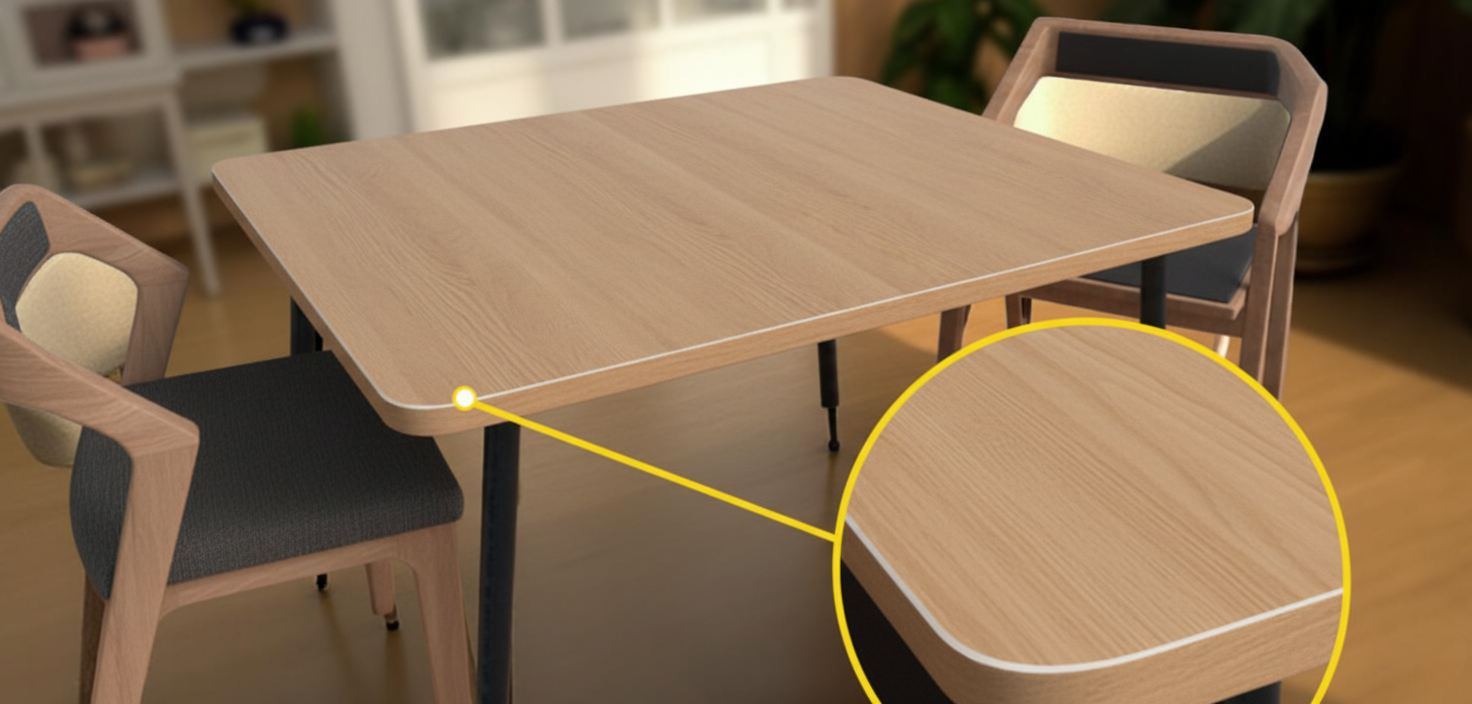
Our table protection films are very popular, and rightly so! Elegant yet durable, these mats not only protect your surfaces from stains and damage, but are also real eye-catchers! If you are clever, you can order a custom-cut table mat from PRINT.GG in our online shop .
The choice is almost unlimited: you can choose from transparent mats, very thick ones, as thick as 2 mm , shape: square with straight corners, square with rounded corners, round or elliptical.
The most popular shape of tables in kitchens, living rooms, and dining rooms is a rectangle with rounded corners, which is why our most popular product is a rectangular mat with rounded edges.
But how do I measure the appropriate radii for my beloved living room or dining room table?
We would like to assist you with this blog!
How to measure corner radii?
If you wish to measure the radius of a corner or require the dimensions of a table protector, simply follow these steps:
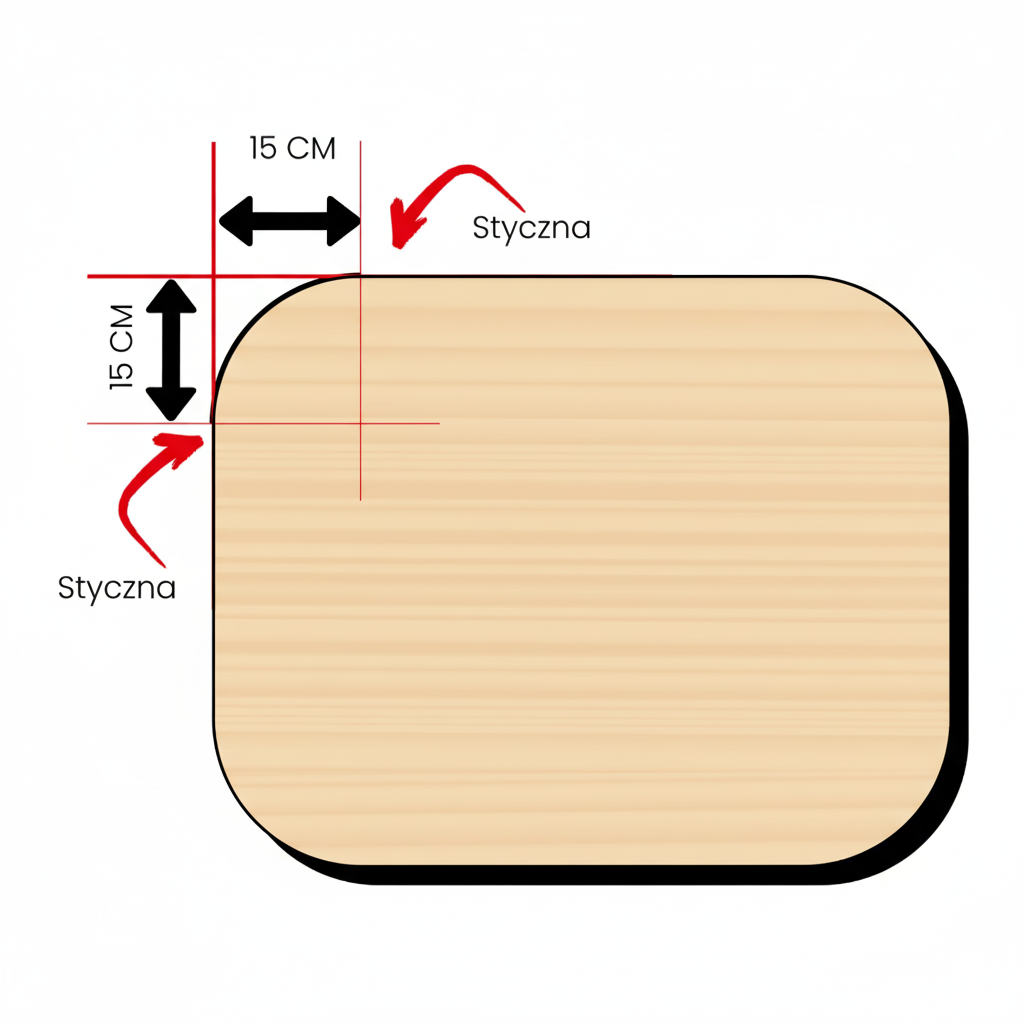
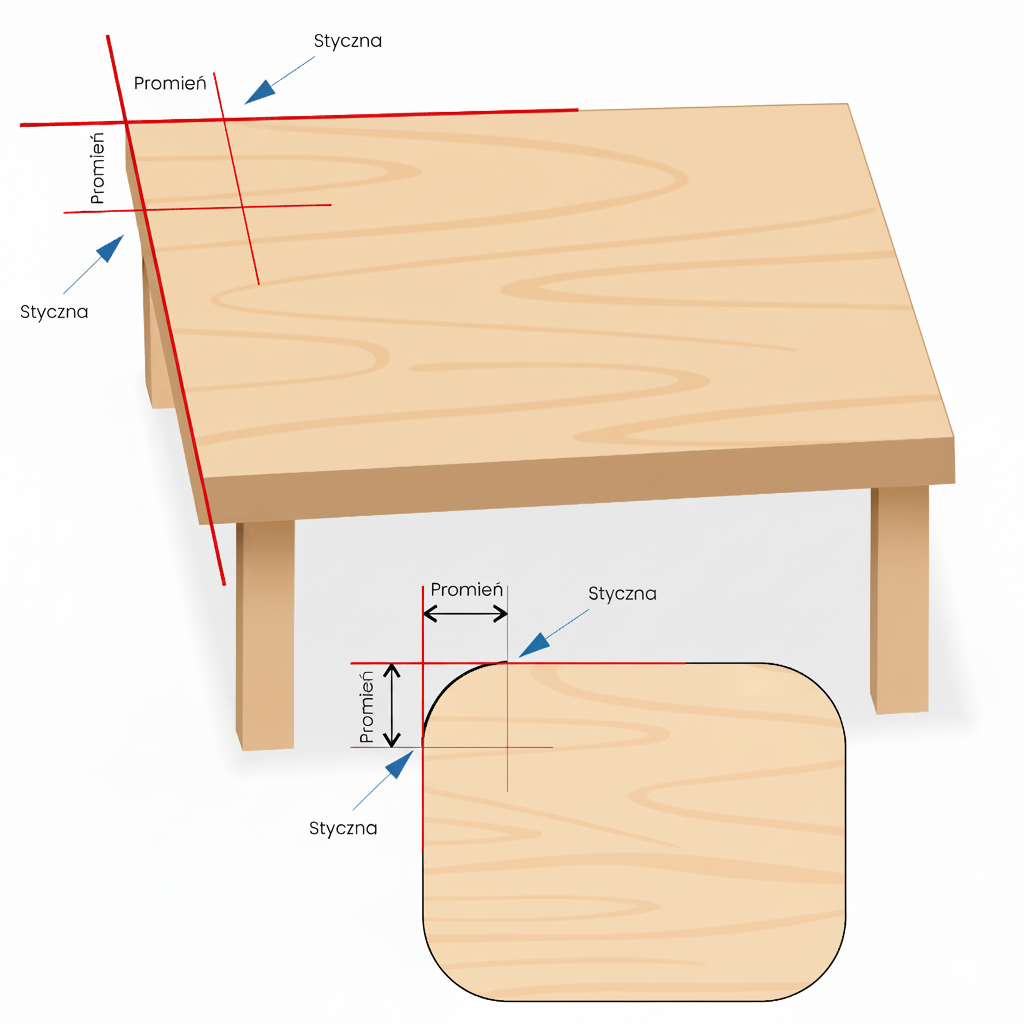
1. Find the points of contact of the radius (see diagram). These are points where the straight edge of the table or surface meets the rounded edge, and both points are equidistant from the existing square corner. The easiest way to score points is by using a carpenter's square.
You can also use a regular ruler for this. In this case, check the measurement by reversing it (first measurement: place the ruler parallel to the vertical red line; second measurement: place the ruler parallel to the horizontal red line). If necessary, mark the points of contact with a pencil.
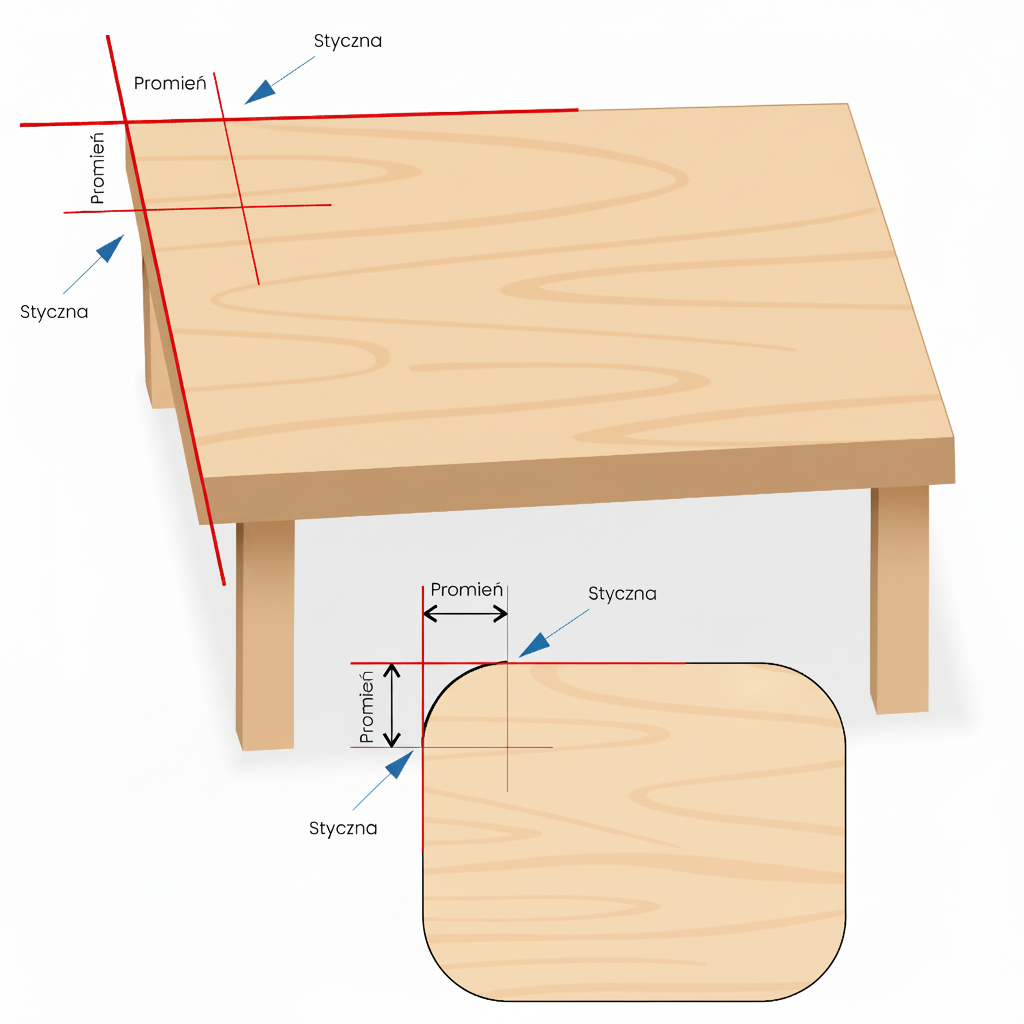
2. The distance between two tangent points and the point where the two red lines meet is the radius (
R
). If you use a carpenter's square, it will determine the intersection of two lines. If you do not have a carpenter's square, you can also place a ruler perpendicular to the corner of the worktop at both points of contact to find out where the lines meet. (You may need to repeat this several times to ensure accuracy.)
3. Measure the radius.
Example:
The distance between two tangent points and the point where two dotted lines meet is 15 cm ( 150 mm ) – this means that the radius of your table is R = 150 .